

Review receiving, storage, picking and dispatch processes alongside warehouse layout and operating goals.

QINGMIAO · SMART WAREHOUSING & LOGISTICS
AI-powered warehousingSoftware and automation, working together
Connect orders, inventory and transport with automated equipment.
Bring greater clarity to warehouse operations and logistics through software and AI scheduling.
Business system integration Automation connectivity Consulting and implementation
ABOUT QINGMIAOGrounded in real operations
Grounded in real operations
Rethinking logistics efficiency
Founded in 2021 and incubated at Zhejiang University, Qingmiao Technology is a technology-focused SME serving automotive components and cross-border commerce. We operate in Ningbo, Hangzhou and Wenzhou, with Shanghai and Fujian operations in preparation. Combining software, warehouse consulting and automation integration, our regional teams support solution planning, implementation and ongoing operations.
01Warehouse consultingProcesses and warehouse layout
02Software systemsOrders, inventory and transport
03Systems integrationConnect business systems and equipment
04Hardware deploymentInstallation and on-site commissioning

1 / 2
ORIGIN & CAPABILITYOperations expertise Software expertise On-site expertise
From university incubation to warehouse and logistics operations
Starting in Ningbo, Qingmiao delivers projects connecting orders, inventory, transport and equipment. Planned priorities include AI algorithms and digital twin research in Hangzhou, and intelligent equipment applications in Wenzhou, bringing research into warehouse and manufacturing operations.
2021Year founded
Zhejiang UniversityTechnology-focused SME
Software + hardwareSoftware and implementation
Manage warehouse operations with WMS and coordinate with order, transport and production systems.
Integrate around equipment protocols and operating conditions to connect system tasks with on-site execution.
PRODUCT MATRIX
Connecting business operations with fulfillment
Connect online stores and physical locations with orders, inventory, equipment and transport.
BUSINESS PLATFORM
Omnichannel Business Platform
Customer engagement and supply chain coordination
Connect online storefronts and physical stores around products, members, marketing and transactions, working with existing systems to coordinate business operations and fulfillment.
Use cases
- Brand storefronts
- Retail chains
- Multi-merchant operations
- Supply chain collaboration
AI & ROBOTICS
AI & Robotics Applications
Combine AI analytics, AGVs and existing systems to connect business coordination with on-site execution in warehouse and logistics operations.
- Workflow assessment
- System coordination
- Implementation planning
01
Warehouse ManagementWMS Warehouse Management
Manage inventory, locations and warehouse operations with traceable receiving and dispatch records.
02
Warehouse ControlWCS Warehouse Control
Connect business systems with automated equipment to coordinate warehouse tasks.
03
Order ManagementOMS Order Management
Consolidate orders across channels, connect warehouse fulfillment and track the order lifecycle.
04
Transport ManagementTMS Transport Management
Manage transport scheduling, tracking and freight costs, connecting warehouse operations with outbound logistics.
AI CAPABILITY
AI SchedulingAI Scheduling & Analytics
Use inventory, task and equipment data to support warehouse analytics and scheduling optimization.
Choose systems around your business needs. Features, integration scope and intelligent scheduling are defined during requirements planning.
CONNECTING SOFTWARE TO OPERATIONS
See your operations in software
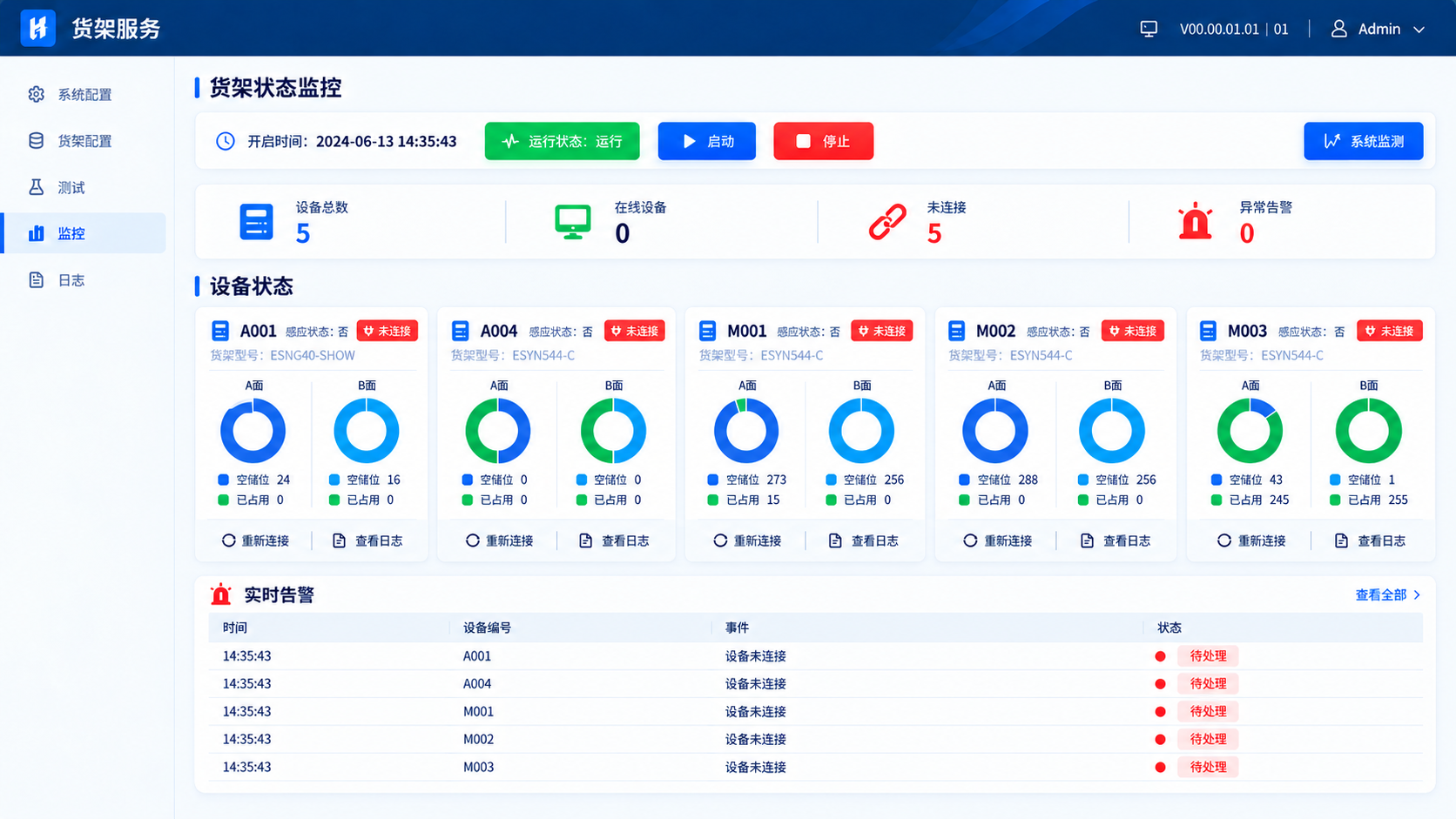
Electronic shelf monitoring brings together equipment connections, location occupancy and operating logs, helping site teams check status, identify exceptions and follow up on tasks.
- Equipment connectivity
- Check whether equipment is online and identify connection issues that need attention.
- Location occupancy
- See how storage locations are being used to inform on-site operations.
- Operating logs
- Review records to support troubleshooting and operational reviews.
Electronic shelf monitoringInterface example
INDUSTRY SOLUTIONS
Software and delivery built around your operations
Focused on automotive components and cross-border commerce, with support for distribution and logistics parks.
FOCUS INDUSTRY · AUTOMOTIVE COMPONENTS
Connect production and warehousing
- The challenge
- A wide range of parts and strict batch traceability require material preparation, receiving and dispatch to stay aligned with production schedules.
- Our approach
- Start with warehouse layout and workflows, use WMS to manage inventory, batches and material movements, and connect WCS with on-site equipment for automated operations.
WMSWCSERP / MESAGVs / Conveyors
Focus: Inventory accuracy · Batch traceability · Production-warehouse coordination
FOCUS INDUSTRY · CROSS-BORDER COMMERCE
Coordinate orders and multi-warehouse fulfillment
- The challenge
- Orders from different channels require consistent information across domestic and overseas warehouses and multiple inventory owners.
- Our approach
- Consolidate orders in OMS, manage warehouse fulfillment in WMS and connect transport through TMS, planning inventory and order coordination across sites and owners.
OMSWMSTMSDomestic / Overseas warehouses
Focus: Order coordination · Multi-warehouse inventory · Fulfillment tracking
EXTENDED APPLICATIONS · DISTRIBUTION & LOGISTICS PARKS
Connect distributed operations
- The challenge
- Central warehouses, regional warehouses, stores and park tenants have distinct workflows, making it difficult to connect information and tasks across stages.
- Our approach
- Combine warehouse and logistics park planning with replenishment, transfer and operational workflows, using software and integration to coordinate multiple locations.
Warehouse planningInventory & transfersSystems integration
Focus: Central-regional coordination · Replenishment & transfers · Operational visibility
PROJECT PRACTICE
From operational challenges to project delivery
Two projects show how software and integration support warehouse operations and group-wide collaboration.
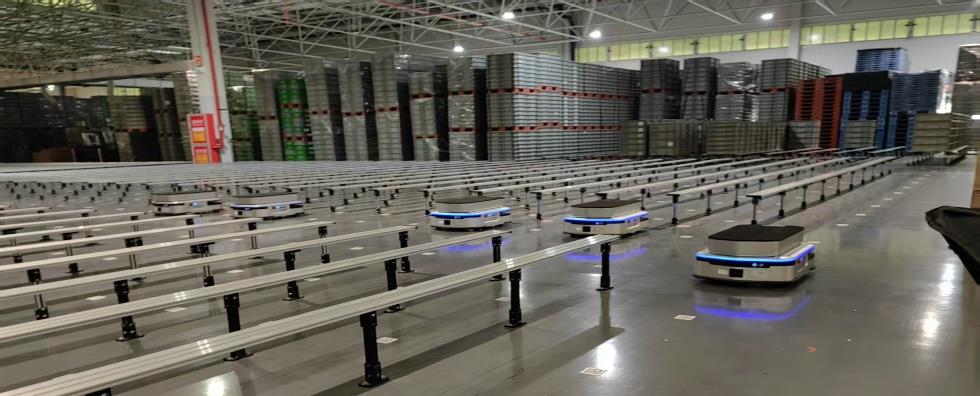
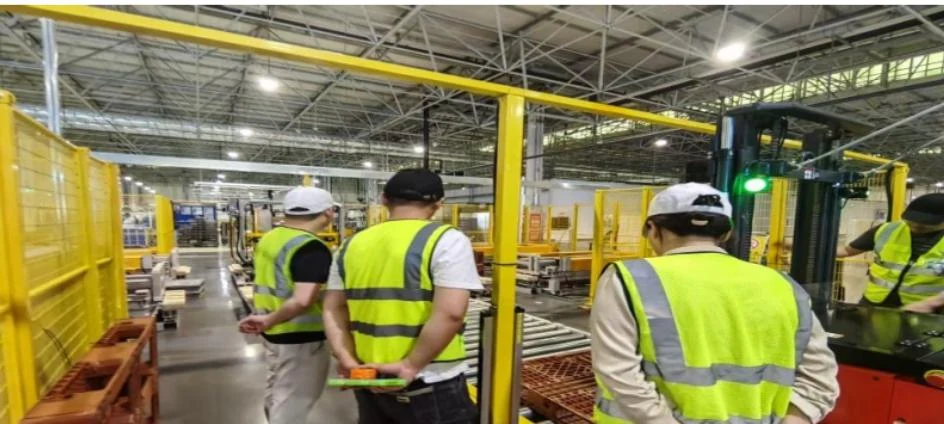
1 / 2

PROJECT 01 · AUTOMOTIVE COMPONENTS
Zhejiang Aisin Hongda Smart warehousing for automotive components
Delivered warehouse planning, operational guidance, WMS and equipment integration for automotive component warehousing.
Project challengesWide range of partsStrict batch traceabilityProduction-warehouse coordinationEquipment coordination
80,000 m²Customer factory area
7.7 million sets / yearAluminum die-casting capacity
2025.03Project go-live
99%+Inventory accuracy
Supports inventory visibility and ongoing improvements in turnover, storage utilization and workforce efficiency.Based on project materials. Factory area and capacity describe the customer; performance figures apply only to this project.
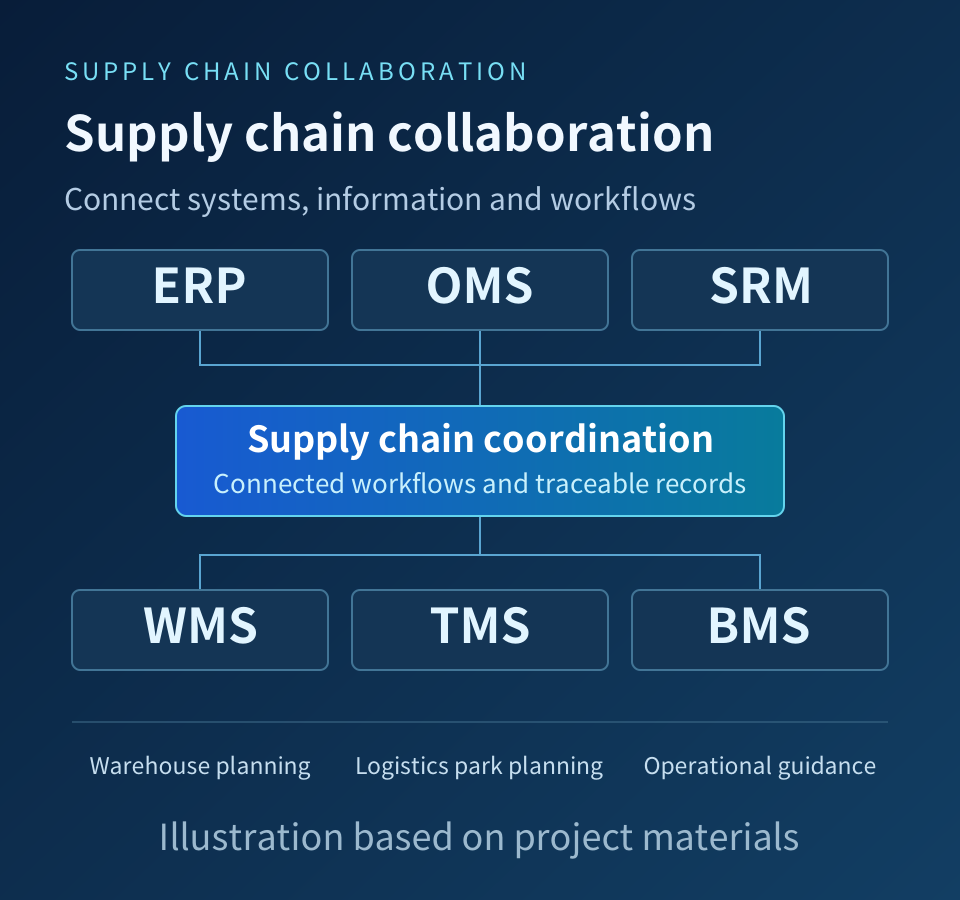
1 / 2,Aisin Hongda
CORE TECHNOLOGY
Connected data and tasks Grounded in on-site execution
Business systems manage orders and inventory, execution systems connect equipment tasks, and site status flows back into software. Analytics and scheduling are based on actual operating data.
- Business system connectivity
- Connect OMS, WMS and TMS with enterprise ERP and MES to reduce information gaps between processes.
- Equipment task coordination
- Connect AGVs, conveyors, sorting equipment and electronic shelving through WCS to track task execution and equipment status.
- Analytics & scheduling
- Use inventory, task and equipment data to plan analysis and optimization around on-site goals.
Analytics & schedulingInventory analytics · Task scheduling · Equipment coordination
Business coordination
OMSWMSTMSERP / MES
Execution & equipment
WCSAGVConveying & sortingElectronic shelving
This diagram shows how components relate. Integration scope, equipment protocols and scheduling methods depend on project requirements.
DELIVERY PROCESS
From requirements to continuous improvement
Tailored design, hands-on delivery and measurable implementation bring business goals into each project stage.
- 01
Operational assessment
Review warehouse processes, inventory, existing systems and equipment to identify the most pressing issues.
Define requirements and scope - 02
Solution planning
Plan warehouse layout and workflows, the software mix, equipment connections and implementation scope.
Develop the solution and delivery plan - 03
Development & integration
Configure systems, connect interfaces and test equipment integration against the required protocols.
Validate system and equipment coordination - 04
Go-live & delivery
Test real operating workflows, train site teams and support the transition to live operation.
Enable teams to use the system - 05
Continuous improvement
Follow up on issues and review operational data to inform future process changes.
Maintain an improvement action list
Support that continues after go-live
Continue discussions on usage issues, training and future needs after go-live. Service scope and support arrangements follow the project agreement.
START A CONVERSATION
Start with a specific challenge Let's discuss your project
Whether you are planning a new warehouse, upgrading an existing one or connecting software and equipment, start with your operational needs.
- Current operations and key challenges
- Existing software and equipment
- Your highest-priority improvements
Phone18268615966Email931423058@qq.com
Office locationsRoom 318, Building 16, 5 Xuefu Road, Yinzhou District, Ningbo, Zhejiang, China
Room 2218, Building 1, 17 Binhe Road, Qingshanhu Subdistrict, Lin'an District, Hangzhou, Zhejiang, China
Room 1003, Building 2, Dongxin Innovation Park, Kechuang 3rd Road, Tingtian Subdistrict, Rui'an, Wenzhou, Zhejiang, China
WeChat official accountQingmiao on WeChatOpen WeChat accountScan with WeChat to follow us